
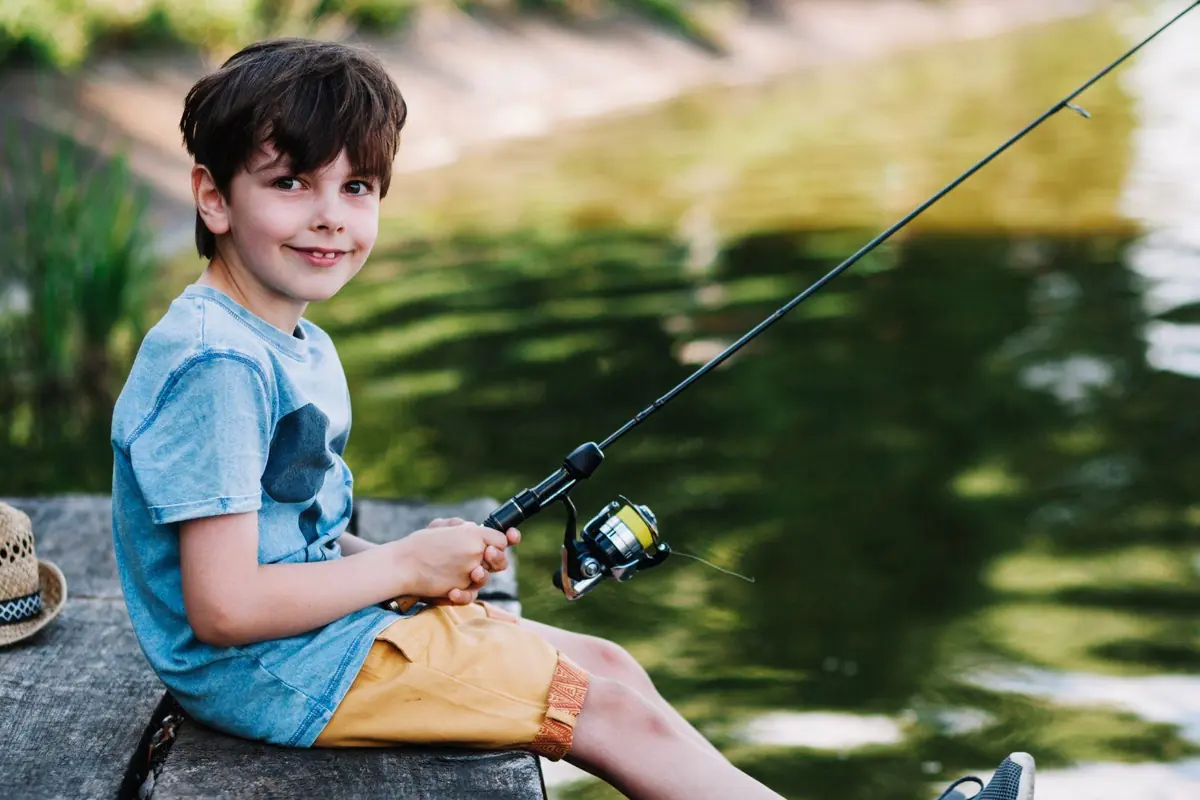
Most parents put off taking a child fishing because the whole thing sounds like a project. You picture a drive before dawn, a pile of gear you do not own, a license you are not sure about, and a bored seven year old asking to leave after fifteen minutes.
It does not have to go that way. A small stocked lake solves most of those problems at once, and Pecan Lake at Pecan Lake Gardens in Queen Creek works well for a first trip. This guide walks you through what it costs, what to bring, what the rules mean in practice, and how to run that first hour on the shore so your child actually wants to come back.
Why a small stocked lake beats a big one
A first fishing trip succeeds or fails on one thing. Does the child feel something pull on the line in the first hour?
Big reservoirs and desert rivers make that hard. You cover a lot of water, you compete with boats and wind, and you often go home with nothing. A small stocked lake flips the odds. Pecan Lake holds largemouth bass, catfish, black crappie and bluegill, and shoals of flathead minnows patrol the edges where the bass hunt them. The fish sit close to shore, so a short cast reaches them.
The shoreline helps too. You fish from grass, not from rocks or a steep bank, so a child can stand comfortably and you can watch two of them at once. The gardens, the mill and the waterwheel sit right there as well, which gives a restless kid somewhere to look between bites.
What it costs, and the one thing parents miss
Fishing entry costs $10 per person at any age. That price covers the child as well as the adult, so a parent and one kid come to $20 for the afternoon.
Now the part that catches families out. Every angler needs a valid Arizona fishing license, whatever their age, and staff check it at the entrance. There is no age exemption here, so if your eight year old holds the pole, your eight year old needs a license.
The gardens do not sell licenses on site. Buy yours from the Arizona Game and Fish Department (opens in a new tab) before you come, and have it ready on your phone when you arrive. Sorting that out the night before turns a frustrating gate conversation into a thirty second one.
What to pack
What the gardens provide
The front desk hands out barbless hooks, and you return them before you leave. That is the one piece of tackle you do not need to buy. The gardens also rent out a few fishing poles, which saves you from buying one before you know whether your child enjoys the sport.
What you bring
Pack the rest yourself:
- A fishing pole, unless you plan to rent one
- Fishing line
- Swivels
- Bait, live or dead only
- A valid Arizona fishing license for every angler
Then pack for a few hours outdoors in Arizona. Bring more water than you think you need, a hat for each child, sunscreen, and a towel for wet hands. Closed shoes beat sandals on a grass bank. A folding chair helps if you plan to stay a while, and a small bag for trash keeps the shoreline clean for the next family.
The bait question
This trips up experienced anglers more than beginners. Pecan Lake allows live or dead bait only. Leave the lures at home, along with artificial bait and hormone bait. The rule protects the balance of the lake, because the water here feeds the gardens and the staff keep a close eye on what goes into it.
For a first trip with children, that restriction works in your favor. Bait fishing suits a beginner far better than casting lures. Your child drops a line in, watches the float, and waits. No technique to learn, no repeated casting that ends in a tangle.
The staff will tell you the fish here love hot dogs, worms and cheese, and they are not joking. A pack of hot dogs from the fridge costs almost nothing and children find it funny, which buys you another twenty minutes of attention. Cut the pieces small and press them firmly onto the hook.
The rules, in plain terms
The full list sits on the fishing page, but these are the ones that shape a family trip.
Everyone releases what they catch. Nothing goes home with you, so explain that to your child before you arrive rather than at the moment they land their first fish.
Everyone uses barbless hooks, and the gardens provide them. A barbless hook slides out of a fish cleanly, and it slides out of a thumb just as cleanly, which matters more than you think on a first trip.
You fish from the grass shoreline only. Nobody gets in the water, waders and boats stay away, and nobody fishes from the bridges. One pole per angler goes in the water at a time, so if you bring two children, bring two poles and two licenses rather than one pole they take turns with.
An adult supervises every age group, including teenagers. Fishing runs during normal opening hours, and special events can change that occasionally, so check before you drive over on an event weekend.
How to run the first hour
Set the pole up before you hand it over. Thread the line, tie the swivel, attach the hook and bait it yourself the first time. A child who waits ten minutes while a parent fights with a knot has already decided how this day is going.
Pick a spot near the edges where the minnows gather rather than the middle of the open water. Cast short. A first cast that lands a few yards out catches more than one that lands thirty yards out and tangles.
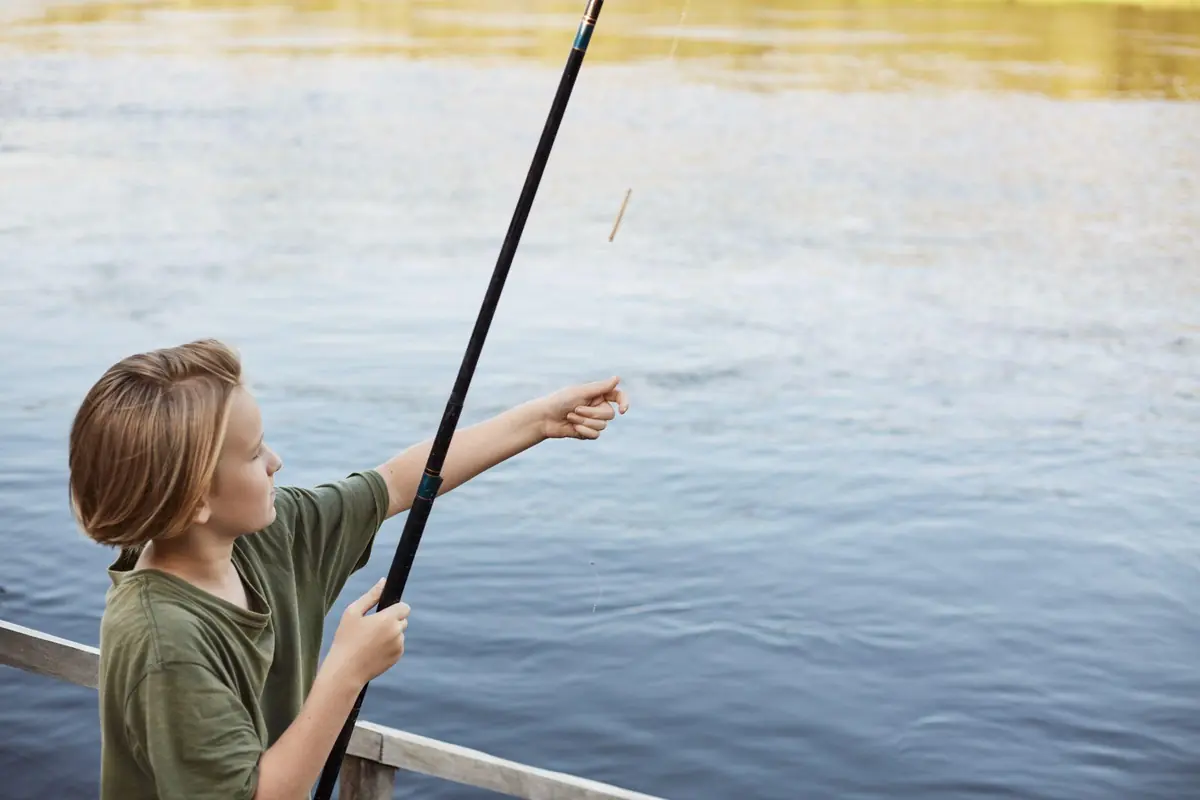
Then manage the waiting, because that is the real skill. Give your child a job: watch the tip of the pole, tell me when it moves. Talk while you wait. Point out the herons and egrets working the shallows, the koi and ducks below the waterwheel, the mill turning on the far bank.
Keep the first session short. Ninety minutes of fishing followed by a walk through the gardens beats three hours on the bank and a meltdown. Finish while they still want more.
What you might catch
Four species live in the lake, and they suit different levels of patience.
Bluegill give a first timer the best odds. They sit near the bank, they take small pieces of bait readily, and they fight hard enough to thrill a child without overwhelming them. Aim for these.
Black crappie belong to the sunfish family and come in easily with the right bait. They make a good second target once your child has landed something.
Catfish grow biggest here and feed along the bottom. A child who hooks one will remember it, but you need patience to get there, so treat it as a bonus rather than the plan.
Largemouth bass act as the sport fish of the lake and hunt the minnows along the edges. They reward skill, which means they usually reward the parent rather than the beginner on a first visit.
When they actually catch something
The moment arrives faster than you expect, and most parents fumble it. Decide who does what beforehand. One of you lifts the fish, the other takes the photo.
Wet your hands before you touch the fish. Dry hands strip the protective slime from its skin. Hold it gently, support its body rather than dangling it by the line, and keep it out of the water for as little time as you can manage.
Take the picture. The gardens encourage it, and a weigh station at the lake tells you more about what your child just landed, which turns a lucky catch into something they can talk about afterwards.
Then slide the fish back and let it swim off. A barbless hook comes out quickly, so this takes seconds. Children handle the releasing part better than most adults expect, as long as you told them the plan before the first cast. Return every loaned hook to the front desk before you leave.
Build the rest of the day around it
The smartest move with young children is to treat the fishing as one part of the visit rather than the whole reason for it. If the fish do not bite, the day still works.
General admission costs $10 for ages 12 and over, and children under 12 walk in free with a paying adult. That covers the themed gardens, the paths between them, a scavenger hunt for kids and the gristmill museum loft, where a waterwheel powers an 1886 mill and an old pecan cracker. Most children who lose interest in a float will find the mill fascinating.
You can also rent a canoe at $16 per person for ages 12 and up, and $5 for each kid under 12. Remember that you cannot fish from a canoe, so treat it as a separate part of the afternoon.
Three restaurants sit a short walk away at Pecan Lake. Hide Out 206 handles drinks and snacks, Your Pie makes pizza, and Caldwell County BBQ smokes Texas style barbecue. Promise dinner at the end and you buy yourself a lot of patience on the bank.
Take them fishing at Pecan Lake
Buy the licenses tonight, pack a pole and a packet of hot dogs, and give your child ninety minutes on a grass bank with a real chance of catching something. Then walk the gardens, climb up to the mill and eat dinner a short walk from the car.
Book fishing entry at $10 per person, or plan your visit to check hours, prices and directions before you come.